
Piano Tuning for Western New York
Rosenberg Tunes Pianos To Peak Condition
We expect our piano to sound great. When you notice something is wrong, you realize the piano needs tuning. Nothing may be “wrong”, but pianos need periodic tuning as frequently as determined by the instrument, its location, and use. A piano is at its most enjoyable when it is in tune. Accurate tuning allows the piano to produce its intended tone, harmony, and expressive range, making it sound the way it was designed to and more rewarding to play and be heard. Rosenberg is the one to call to meet your needs, especially standard tuning.
How does a piano go out of tune
Several natural factors cause a piano’s tuning to drift over time. Because a piano is built from wood, metal, and fabric, materials that constantly respond to their environment, its pitch is never completely stable. The wooden soundboard and frame, along with the felt hammers and dampers, change in response to temperature and humidity fluctuations. At the same time, the metal strings — responsible for determining pitch — slowly stretch and lose their precise tension, altering the tune. Whether in regular use exercising strings and action parts, idle in a storage environment, or any condition in between, the piano slowly drifts away from its intended sound. When a piano goes far off pitch, it may need a pitch raise to bring it back to standard tuning.
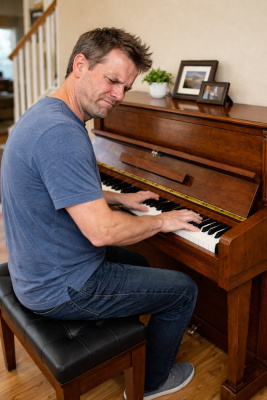
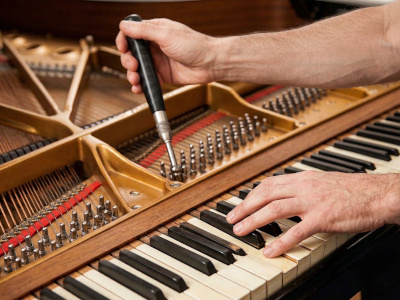
Use our experience to your advantage
A visit by Lynn Rosenberg can bring your treasured instrument back in tune. A well-maintained piano stays stable, sounds richer with authentic pitch, and is a joy to play. Regular tuning is an investment in preserving both the instrument’s value and the pleasure it brings to its listeners. Lynn uses the aural method of tuning by ear and experience. This classical approach leverages skill and a practiced ear for harmonics instead of equipment confined to set pitch note by note.
A simple tuning is for instruments already on pitch. If a pitch raise is needed, this can be done to either key of C or A. For a newly restrung piano, chipping will condition new string tension evenly, helping each stabilize at pitch. If your piano is newly arrived or has been moved, we recommend a wait before tuning for it to adjust to the new environment.
Added Benefits of Periodic Tuning
During a tuning visit, Rosenberg personnel may note obvious or subtle signs of wear, deterioration, or developing damage. Such issues if left unaddressed may have long‑term consequences for the instrument. Bringing such issues to the owner’s attention allows action to prevent future or long-term effects on the piano’s performance and longevity. Serious conditions may be the reason the piano is out of tune or resists proper tuning.
Restoring a neglected piano to full function may require repairs well beyond a standard tuning. For example, findings during a tuning session may lead to recommendations for further steps, such as action regulation, voicing, or pedal and damper adjustments. We will respond to your decisions after you consider our suggested actions.